<?xml version="1.0" encoding="utf-8"?><feed xmlns="http://www.w3.org/2005/Atom" ><generator uri="https://jekyllrb.com/" version="4.4.1">Jekyll</generator><link href="https://www.jsrowe.com/feed/review.xml" rel="self" type="application/atom+xml" /><link href="https://www.jsrowe.com/" rel="alternate" type="text/html" /><updated>2026-03-01T19:57:22+00:00</updated><id>https://www.jsrowe.com/feed/review.xml</id><title type="html">James’ Thoughts | Review</title><subtitle>The digital journal of James Rowe. Something between WordPress, LiveJournal and gists.</subtitle><author><name>James Rowe</name></author><entry><title type="html">Quick Thoughts on When Blood Breaks Down: Life Lessons from Leukemia</title><link href="https://www.jsrowe.com/when-blood-breaks-down/" rel="alternate" type="text/html" title="Quick Thoughts on When Blood Breaks Down: Life Lessons from Leukemia" /><published>2025-05-18T01:21:19+00:00</published><updated>2025-05-18T01:21:19+00:00</updated><id>https://www.jsrowe.com/when-blood-breaks-down</id><content type="html" xml:base="https://www.jsrowe.com/when-blood-breaks-down/"><![CDATA[<p><img src="/assets/posts-images/book-covers/when-blood-breaks-down.png" alt="When Blood Breaks Down book cover" style="border-radius: 4px;" /></p>

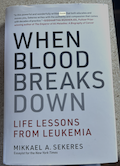
<p>Goodman, Mikkael A. Sekeres. <a href="https://www.goodreads.com/book/show/51777400-when-blood-breaks-down"><em>When Blood Breaks Down: Life Lessons from Leukemia</em></a>. MIT Press, 2020.</p>

<h2 id="my-review-45">My Review: 4/5</h2>

<p>I had a hard time reading this book. The first patient in the first chapter had the same diagnosis as myself: AML with FLT-3 mutation, which is described as incredibly aggressive with a very poor outlook. After surviving myself for 18 months, I came back and was able to read this book with a mind of curiosity.</p>

<p>The reality is many of the treatments I received are both new and old. “7+3” has been around for at least 40 years, and some of the new drugs targeting the FLT-3 mutation were only approved as late as 2021. I shudder to think what my outcome to treatment might have been without these specialty drugs.</p>

<p>But then comes the rub. The price tags on these treatments mean real people are choosing death over life. Patients struggle to balance what their community can bear versus the return they can give. My own treatment to date, according to the hospital’s itemized bill, comes to $1,600,000. And I think to myself everyday: Am I worth that?</p>

<p>The book covers other types of leukemia, CML and ALL. But the chapters and descriptions of “my” cancer made this an informative but hard read<sup id="fnref:death"><a href="#fn:death" class="footnote" rel="footnote" role="doc-noteref">1</a></sup>. Dr. Sekeres is unflinching in his observations of the death and mayhem leukemia wreaks when blood breaks down.</p>

<hr />

<h3 id="significant-revisions">Significant Revisions</h3>

<ul>
  <li>May 18th, 2025 Originally published on <a href="https://www.jsrowe.com">https://www.jsrowe.com</a> with uid 789EE969-29E6-47AF-9478-FB99B5317223</li>
</ul>

<h3 id="footnotes">Footnotes</h3>

<div class="footnotes" role="doc-endnotes">
  <ol>
    <li id="fn:death">
      <p>In the book, the AML+FLT-3 patient dies. <a href="#fnref:death" class="reversefootnote" role="doc-backlink">&#8617;</a></p>
    </li>
  </ol>
</div>]]></content><author><name>James Rowe</name></author><category term="review" /><category term="book" /><category term="nonfiction" /><category term="cancer" /><summary type="html"><![CDATA[]]></summary></entry><entry><title type="html">Quick Thoughts on Writing Well: The Classic Guide to Writing Nonfiction</title><link href="https://www.jsrowe.com/on-writing-well/" rel="alternate" type="text/html" title="Quick Thoughts on Writing Well: The Classic Guide to Writing Nonfiction" /><published>2025-05-06T01:20:23+00:00</published><updated>2025-05-06T01:20:23+00:00</updated><id>https://www.jsrowe.com/on-writing-well</id><content type="html" xml:base="https://www.jsrowe.com/on-writing-well/"><![CDATA[<p><img src="/assets/posts-images/book-covers/on-writing-well.png" alt="On Writing Well book cover" style="border-radius: 4px;" /></p>

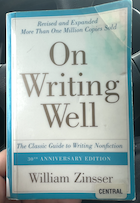
<p>Zinsser, William. <a href="https://www.goodreads.com/book/show/53343.On_Writing_Well"><em>On Writing Well: The Classic Guide to Writing Nonfiction</em></a>. 30th anniversary ed. HarperCollins, 2006.</p>

<h2 id="my-review-55">My Review: 5/5</h2>

<p>Wish I had read this book as I fumbled my way through my writing journey. It plainly answers so many questions from my early attempts at nonfiction writing. Notably, <a href="https://www.jsrowe.com/journaling-why-write/">why I write</a>, why some <a href="https://www.jsrowe.com/bookshelf/">books</a> go on the bookshelf, and others I just can’t finish. Writing is a skill to be practiced and learned, and this book contains many pointers worth a review.</p>

<p>Zinsser<sup id="fnref:zinsser"><a href="#fn:zinsser" class="footnote" rel="footnote" role="doc-noteref">1</a></sup> has a chapter for everyone’s writing style. Whether you’re writing a memoir or a sports page, the goal is to hook the reader and communicate your thoughts as effectively as possible. Another truism: Write for yourself; an audience will follow. Still true in today’s AI spam-filled world, good writing is like a great meal. Filling and appreciated.</p>

<p>I think the most important takeaway is that reading your writing aloud is one way to identify clunky language. Brevity is a must, cliches must go. And, fun fact, I have painted so many gallons of Zinsser primer, yet I didn’t make the connection until the author did so for me.</p>

<hr />

<h3 id="significant-revisions">Significant Revisions</h3>

<ul>
  <li>May 6th, 2025 Originally published on <a href="https://www.jsrowe.com">https://www.jsrowe.com</a> with uid F982350A-00FC-4F0A-B275-BE067E0E568F</li>
</ul>

<h3 id="footnotes">Footnotes</h3>

<div class="footnotes" role="doc-endnotes">
  <ol>
    <li id="fn:zinsser">
      <p><a href="https://www.zinsserprimers.com">https://www.zinsserprimers.com</a> Feels like they should have a footnote to their successful son. <a href="#fnref:zinsser" class="reversefootnote" role="doc-backlink">&#8617;</a></p>
    </li>
  </ol>
</div>]]></content><author><name>James Rowe</name></author><category term="review" /><category term="book" /><category term="nonfiction" /><category term="writing" /><summary type="html"><![CDATA[]]></summary></entry><entry><title type="html">Quick Thoughts on The Making of a Manager: What to Do When Everyone Looks to You</title><link href="https://www.jsrowe.com/the-making-of-a-manager/" rel="alternate" type="text/html" title="Quick Thoughts on The Making of a Manager: What to Do When Everyone Looks to You" /><published>2025-03-13T01:54:53+00:00</published><updated>2025-03-13T01:54:53+00:00</updated><id>https://www.jsrowe.com/the-making-of-a-manager</id><content type="html" xml:base="https://www.jsrowe.com/the-making-of-a-manager/"><![CDATA[<p><img src="/assets/posts-images/book-covers/the-making-of-a-manager.png" alt="The Making of a Manager Book Cover" style="border-radius: 4px;" /></p>

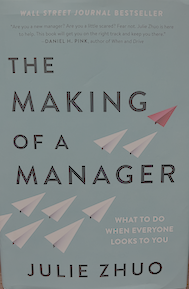
<p>Zhuo, Julie. <a href="https://www.goodreads.com/book/show/38821039-the-making-of-a-manager"><em>The Making of a Manager: What to Do When Everyone Looks to You</em></a>. Portfolio/Penguin, 2019.</p>

<h2 id="my-review-45">My Review 4/5</h2>

<p>Honestly, I wish I had picked this one up earlier in my career as a manager.</p>

<p>The book jumps right into the observation that great managers are made, not born. There are tangible, discrete, learnable skills to being a great manager, and pursuing them takes time and effort. Congratulations; reading this book is a step in the right direction.</p>

<p><em>The Making of a Manager</em> is especially helpful in those first few years of management when you’re navigating all the challenges of the promotion, facing new expectations from senior leadership, and letting go of being an individual contributor.</p>

<p>The chapter “Your First Three Months” offers direct advice on navigating the transition. Pro tip: There was probably someone else on the team going for the same promotion; now, your first management task is rallying the team.</p>

<p>Other chapters cover delivering hard feedback when an employee isn’t a good fit for the organization and optimizing your most impactful decision—who you hire. This book is a candid look at the rapid growth of Facebook<sup id="fnref:meta"><a href="#fn:meta" class="footnote" rel="footnote" role="doc-noteref">1</a></sup> and Zhuo’s career as a manager.<sup id="fnref:woman"><a href="#fn:woman" class="footnote" rel="footnote" role="doc-noteref">2</a></sup> I think the book reads conversationally with a vibe of “If I was figuring it out as I went, along so can you!”</p>

<p>Reading this in 2025, it seems the “growth at all costs” days of ZIRP are long behind us, but even if you’re not scaling a team of 10 to 100, the bulk of the content covers fundamentals like “Leading a Small Team” and “The Art of Feedback.” Worth a read.</p>

<p>The lesson is that management is a skill just like programming—or design, in Zhuo’s case—and must be nurtured and practiced. Use this book to build your skills.</p>

<hr />

<h3 id="significant-revisions">Significant Revisions</h3>

<ul>
  <li>Mar 13th, 2025 Originally published on <a href="https://www.jsrowe.com">https://www.jsrowe.com</a> with uid FC17D53E-D97D-4D8D-8E5B-B6628DB86C21</li>
</ul>

<h3 id="footnotes">Footnotes</h3>

<div class="footnotes" role="doc-endnotes">
  <ol>
    <li id="fn:meta">
      <p>Now “Meta” … forever “Facebook” in my mind. <a href="#fnref:meta" class="reversefootnote" role="doc-backlink">&#8617;</a></p>
    </li>
    <li id="fn:woman">
      <p>Especially refreshing to read insights and tips from a female leader in her field. There are specific sections pertaining to work-life balance, children and other advice that will make you a better manager not found in other leadership books. <a href="#fnref:woman" class="reversefootnote" role="doc-backlink">&#8617;</a></p>
    </li>
  </ol>
</div>]]></content><author><name>James Rowe</name></author><category term="review" /><category term="book" /><category term="nonfiction" /><category term="leadership" /><summary type="html"><![CDATA[]]></summary></entry><entry><title type="html">Quick Thoughts on The Advantage: Why Organizational Health Trumps Everything Else in Business</title><link href="https://www.jsrowe.com/the-advantage/" rel="alternate" type="text/html" title="Quick Thoughts on The Advantage: Why Organizational Health Trumps Everything Else in Business" /><published>2025-03-03T01:05:56+00:00</published><updated>2025-03-03T01:05:56+00:00</updated><id>https://www.jsrowe.com/the-advantage</id><content type="html" xml:base="https://www.jsrowe.com/the-advantage/"><![CDATA[<p><img src="/assets/posts-images/book-covers/the-advantage.png" alt="The Advantage Book Cover" style="border-radius: 4px;" /></p>

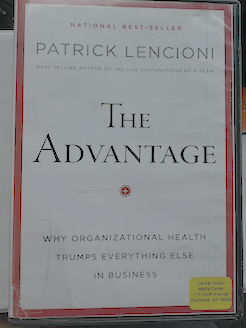
<p>Lencioni, Patrick. <a href="https://www.goodreads.com/book/show/12975375-the-advantage"><em>The Advantage: Why Organizational Health Trumps Everything Else in Business</em></a>. Jossey-Bass, 2012.</p>

<h2 id="my-review-45">My Review 4/5</h2>

<p>This book doesn’t follow the “fable” model of Lencioni’s other works;<sup id="fnref:other"><a href="#fn:other" class="footnote" rel="footnote" role="doc-noteref">1</a></sup> instead, it presents a six-question framework to evaluate organizational health, also known as “company culture.” The book is based on firsthand anecdotes from decades in consulting, and makes the case for how company culture truly does eat strategy for breakfast.</p>

<p><strong>The Six Questions</strong></p>

<ol>
  <li>Why do we exist?</li>
  <li>How do we behave?</li>
  <li>What do we do?</li>
  <li>How will we succeed?</li>
  <li>What is most important, right now?</li>
  <li>Who must do what?</li>
</ol>

<p>Each of the six questions builds on the last. Lencioni clearly answers each question in turn and defines what success looks like. Effective communication is a major theme of this book, including building trust in your team, identifying working styles (Myers-Briggs), and most importantly, achieving clarity during crucial conversations.</p>

<p><em>The Advantage</em> is the application of company behaviors to the necessary actions in pursuit of the purpose of the organization. Even for my own endeavors, answering these questions helps achieve a better outcome.<sup id="fnref:noted"><a href="#fn:noted" class="footnote" rel="footnote" role="doc-noteref">2</a></sup></p>

<p>Great read; would recommend especially for leaders who work across departments.</p>

<hr />

<h3 id="significant-revisions">Significant Revisions</h3>

<ul>
  <li>Mar 3rd, 2025 Originally published on <a href="https://www.jsrowe.com">https://www.jsrowe.com</a> with uid 0FDDB77D-0409-49DA-9A4F-8BCB33E31CB7</li>
</ul>

<h3 id="footnotes">Footnotes</h3>

<div class="footnotes" role="doc-endnotes">
  <ol>
    <li id="fn:other">
      <p><a href="https://www.goodreads.com/book/show/21343.The_Five_Dysfunctions_of_a_Team"><em>The Five Dysfunctions of a Team</em></a> and <a href="https://www.goodreads.com/book/show/49146.The_Five_Temptations_of_a_CEO"><em>The Five Temptations of a CEO</em></a> jump to mind. <a href="#fnref:other" class="reversefootnote" role="doc-backlink">&#8617;</a></p>
    </li>
    <li id="fn:noted">
      <p>For example, in creating <a href="https://noted.jsrowe.com">https://noted.jsrowe.com</a>, I’ve found a home for some of my quick thoughts without diluting my purpose of this site. <a href="#fnref:noted" class="reversefootnote" role="doc-backlink">&#8617;</a></p>
    </li>
  </ol>
</div>]]></content><author><name>James Rowe</name></author><category term="review" /><category term="book" /><category term="nonfiction" /><category term="leadership" /><summary type="html"><![CDATA[]]></summary></entry><entry><title type="html">Quick Thoughts on A Short History of Nearly Everything</title><link href="https://www.jsrowe.com/a-quick-history-of-nearly-everything/" rel="alternate" type="text/html" title="Quick Thoughts on A Short History of Nearly Everything" /><published>2025-01-30T04:16:08+00:00</published><updated>2025-01-30T04:16:08+00:00</updated><id>https://www.jsrowe.com/a-quick-history-of-nearly-everything</id><content type="html" xml:base="https://www.jsrowe.com/a-quick-history-of-nearly-everything/"><![CDATA[<p><img src="/assets/posts-images/book-covers/book-a-short-history-of-nearly-everything.png" alt="" /></p>

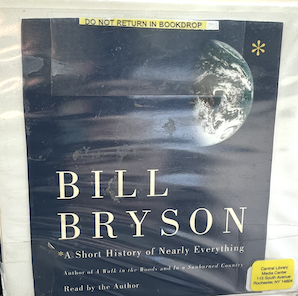
<p>Bryson, Bill. <em><a href="https://www.goodreads.com/book/show/3112496-a-short-history-of-nearly-everything">A Short History of Nearly Everything</a></em>. Penguin Random House Audio Publishing Group, 2006. Audiobook. ISBN 9780739375617 (ISBN10: 073937561X).</p>

<h2 id="my-review-45">My Review: 4/5</h2>

<p>A very easy, approachable listen mostly on scientific knowledge up until the title’s publication year of 2003. From an inspection of the universe and the very large to an understanding of atoms and the very small, this book covers a lot of core scientific concepts in a short format. I like that Bryson tried to give accolades to dozens of scientists whom I had never heard of, but what I took away is that if you want to be scientifically remembered, have a constant named for yourself. Be like <a href="https://en.wikipedia.org/wiki/Planck_constant">Planck</a> or <a href="https://en.wikipedia.org/wiki/Avogadro_constant">Avogadro</a>.</p>

<p>A repeating theme of the book is humanity’s desire for <a href="https://en.wikipedia.org/wiki/Occam's_razor">simple explanations</a> of complex processes. Every time someone declares “Yes, we have discovered everything there is to know about <em>subject</em>,” it turns out that just behind a curtain of understanding are whole new fields of study.</p>

<p>Before the theory of plate tectonics and continental drift (which explain how sea fossils ended up on mountain tops or millions of miles apart), contemporaries of the time theorized that land bridges were conveniently inserted on every portion of the globe to “explain” how species traversed such great distances.</p>

<p>Not sure if I really want to pursue more knowledge on prions or quantum states of electrons, but I learned something new in every chapter of the book. Except for people’s names—those have quickly receded behind the tidbits I picked up about #science.</p>

<p>I’m left with two very distinct feelings. One, how amazing is the happy accident of my existence, my immense collection of borrowed atoms and DNA at the culmination of now? Two, if this truly is it, I’d better make the most of it.</p>

<h3 id="date-read">Date Read</h3>
<p>2025/01/23</p>

<hr />

<h3 id="significant-revisions">Significant Revisions</h3>

<ul>
  <li>Jan 30th, 2025 Originally published on <a href="https://www.jsrowe.com">https://www.jsrowe.com</a> with uid BC435B9A-1214-4AF3-A9D6-CB2012D829E7</li>
</ul>]]></content><author><name>James Rowe</name></author><category term="review" /><category term="book" /><category term="non-fiction" /><category term="history" /><summary type="html"><![CDATA[]]></summary></entry><entry><title type="html">Quick Thoughts on The Manager’s Path: A Guide for Tech Leaders Navigating Growth &amp;amp; Change</title><link href="https://www.jsrowe.com/the-managers-path/" rel="alternate" type="text/html" title="Quick Thoughts on The Manager’s Path: A Guide for Tech Leaders Navigating Growth &amp;amp; Change" /><published>2025-01-18T04:23:33+00:00</published><updated>2025-01-18T04:23:33+00:00</updated><id>https://www.jsrowe.com/the-managers-path</id><content type="html" xml:base="https://www.jsrowe.com/the-managers-path/"><![CDATA[<p><img src="/assets/posts-images/book-the-managers-path.png" alt="the managers path paperback book" class="center-img img-stylish" /></p>

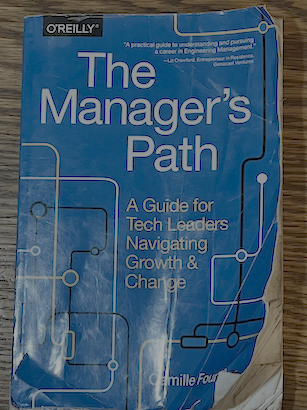
<p>Fournier, Camille. <em><a href="https://www.goodreads.com/book/show/33369254-the-manager-s-path">The Manager’s Path: A Guide for Tech Leaders Navigating Growth and Change</a></em> (1st edition). O’Reilly Media, 2017.</p>

<p>This book is also featured on my recommendations for an <a href="/bookshelf/#engineers-path-to-leadership">engineers path to leadership</a>.</p>

<h2 id="my-review-55">My Review: 5/5</h2>

<p>If you are in the software engineering profession and you want a guide to navigate your career, this book is a must-read.</p>

<p>My experience has been that <em>The Manager’s Path</em> is an oft cited and oft recommended leadership book for software engineers considering how to navigate their careers. This book has everything you could hope for, but is especially relevant for leaders in the midst of a career transition as detailed below. This book escaped my Goodreads review migration primarily because I was always “in the middle” of reading it and never stopped to complete a review on that site.</p>

<p>I think I was recommended this book when I first inquired about advancing in my career to a tech lead position. Initially, I started with the lessons on mentoring, progressing to the chapters on managing projects and teams. Even now, as I’ve completed almost six years as an engineering manager, I still find myself referring to the lessons this book contains. As you can see from the above image, it is one of my most thumbed books.</p>

<p>Fournier’s experience and writing to software engineer audience includes specific considerations of leading in the software engineering domain, which is still a relatively young profession. To emphasize this point, the chapter progression below provides guidance and relevance no matter where you are in your career progression.</p>

<p>Mentoring -&gt; Tech Lead -&gt; Managing People -&gt; Managing a Team -&gt; Managing Multiple Teams -&gt; Managing Managers -&gt; The Big Leagues</p>

<h3 id="key-sections">Key Sections</h3>

<p>There are multiple “keeping it real” sections that contrast what you think a promotion means you’ll be doing vs. what you’ll actually be doing.</p>

<p>You think you want to become a tech lead because then everyone will finally listen to your opinion on tabs vs. spaces, but now you have to lead a team you don’t directly manage.</p>

<p>You think you want to become a manager because then you’ll get to prioritize those platform upgrades or finally adopt a new deployment pipeline, only to find out that the business expects results from you—oh, and the tech lead you had hoped would lead the project suddenly took an offer outside the company.</p>

<p>Another aspect that this book covers is that when times are tough, when you’re uncertain, its natural to reach for what you were an expert in—for what you’re comfortable doing.</p>

<p>This is a regression; every promotion and move up the ladder means you will be expected to perform the responsibilities of that role—not getting in your team’s way as you try to do your old job. But don’t forget that leadership is a practice of credibility, and this book offers many great examples of staying current without being in the way.</p>

<p>I know a review should include some counterpoint to avoid the perception of being snowed, but I think this book will continue to be one of my favorites. Perhaps the only thing it’s missing is complemented by the author’s recommendation of two other great books: <em><a href="https://www.goodreads.com/book/show/50937.First_Break_All_the_Rules">Marcus Buckingham’s First, Break All the Rules: What the World’s Greatest Managers Do Differently</a></em> and <em><a href="https://www.goodreads.com/book/show/84525.What_Got_You_Here_Won_t_Get_You_There">What Got You Here Won’t Get You There</a></em>.</p>

<hr />

<h3 id="significant-revisions">Significant Revisions</h3>

<ul>
  <li>Jan 18th, 2025 Originally published on <a href="https://www.jsrowe.com">https://www.jsrowe.com</a> with uid 3B4019BA-FC41-4645-BD1A-298858300444</li>
  <li>Jan 12th, 2025 Draft created</li>
</ul>]]></content><author><name>James Rowe</name></author><category term="review" /><category term="book" /><category term="nonfiction" /><category term="leadership" /><summary type="html"><![CDATA[]]></summary></entry><entry><title type="html">Quick Thoughts on WIRED Jan/Feb 2025, The Big Tech Issue</title><link href="https://www.jsrowe.com/wired-the-big-tech-issue/" rel="alternate" type="text/html" title="Quick Thoughts on WIRED Jan/Feb 2025, The Big Tech Issue" /><published>2025-01-18T03:27:49+00:00</published><updated>2025-01-18T03:27:49+00:00</updated><id>https://www.jsrowe.com/wired-the-big-tech-issue</id><content type="html" xml:base="https://www.jsrowe.com/wired-the-big-tech-issue/"><![CDATA[<p><img src="/assets/posts-images/wired-2025-jan-feb-issue-cover.png" alt="cover page of WIRED magazine" class="center-img img-stylish" /></p>

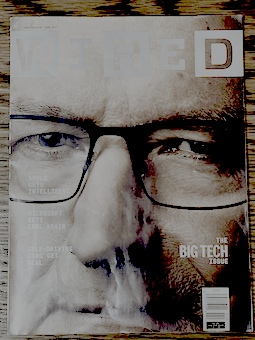
<p><em>WIRED</em>. <a href="https://www.amazon.com/WIRED-Magazine-January-February-Issue/dp/B0DNNRR73X">“The Big Tech Issue.” January/February 2025</a>.</p>

<h2 id="my-review-55">My Review: 5/5</h2>

<p>As a long-time <em>WIRED</em> subscriber, I found this edition to be a collection of hits. Here are my quick thoughts on each of the pieces I enjoyed.</p>

<h3 id="revenge-of-the-softies">Revenge of the Softies</h3>

<p>This is a quick 50-year review piece of how Microsoft has bought, built, and restructured its way back into the hearts and minds of software engineers. Starting mainly with Satya Nadella’s rise to CEO, this feature covers how the past 15 years have included hits like Azure, LinkedIn, GitHub, OpenAI, and Activision. There’s even a note about the Minecraft purchase being driven by consumer perception rather than a traditional business ROI calculation.</p>

<p>The feature catalogs plenty of missteps by all leaders—Gates, Ballmer, and Nadella—but especially now, with investments into OpenAI and Copilot, I can attest as a voice inside the industry that Microsoft has come a long way from its Borg reputation.</p>

<h3 id="the-watchful-intelligence-of-tim-cook">The Watchful Intelligence of Tim Cook</h3>

<p>It’s hard to think about Apple and not Steve Jobs, but from the biographies I’ve read about him, Jobs set out to create a company that would outlive himself. To a large part, it seems Tim Cook has succeeded in continuing the longevity of Apple. This interview primarily focuses on what Apple has planned for AI and the Apple Intelligence roadmap.</p>

<p>I can’t say that there was anything earth-shattering in the interview itself, other than revealing how Tim Cook can be very brief in response to a topic he doesn’t want to elaborate on. Cook and Apple seem to continue to pursue AI on their devices via dedicated chips, which I think is the most compelling future for containing the costs of large language models for everyday use.</p>

<h3 id="the-new-cold-warrior">The New Cold Warrior</h3>

<p>This was practically a miniseries plot that covers the rising investments China has been making into becoming self-sufficient with advanced chip making and technologies, and how one government administration official, Jake Sullivan, has worked to bring awareness to the issue. The United States is no longer able to use its export controls to drive behavioral changes in the world, and with more conflict in the world, investing in our own capabilities is critical to long-term national security and advancements.</p>

<p>This also dovetailed with the other feature story on getting the CHIPS act passed and increasing domestic investments. <a href="https://en.wikipedia.org/wiki/The_World_Is_Flat">The world may be flat</a>, but geopolitical ambition is very much alive.</p>

<h2 id="honorable-mentions">Honorable Mentions</h2>

<h3 id="move-slowly-and-build-things">Move Slowly and Build Things</h3>

<p>If ever the power of one voice and one email could be seen in a local community, the location of a CHIPS plant in Ohio is traced to a Lorain resident. This short feature covers the on-the-ground impact of the CHIPS act in bringing construction and manufacturing to the Midwest. Reading this after the “The New Cold Warrior” really highlights the importance of maintaining our own regional capabilities.</p>

<p>Far from an isolationist argument, the article focuses on the practicality of sourcing things as simple as protective equipment like <a href="https://www.nytimes.com/2022/03/05/business/dealbook/american-mask-makers.html">masks</a>. I think that during times of crisis, any government’s sovereign mandate is to its people, so we shouldn’t be surprised by those same governments prioritizing their domestic capabilities at home during global catastrophes. An ounce of prevention—domestic investment—is worth a pound of cure.</p>

<h3 id="follow-that-car">Follow That Car</h3>

<p>Here, the writers followed Waymo cars to get a feel for the technological progression. Putting aside that mass transit and cities designed to be carless are the best proven antidotes to congestion, the key takeaway is that Waymo can get people where they need to go without (<em>gasp</em>) the labor of a driver and the anxiety of putting two strangers together in a car.</p>

<h3 id="the-inside-scoop-on-dessert-tech">The Inside Scoop on Dessert Tech</h3>

<p>I knew that air content in ice cream is what distinguishes, say, “premium” from “light,” and that gelato is much denser. What I didn’t know is how the complex chemistry and manufacturing processes come together to make this seemingly simple, delightful treat. Allegedly, “heat-shock-resistant ice cream” might be on the horizon, just in time for summer.</p>

<h3 id="copycats-and-dogs">Copycats (and Dogs)</h3>

<p>This was a look at how far the pet-cloning business has come. Honestly, it’s a little terrifying to think there is a waitlist of people paying ~$50k for a genetic clone of their pets, but to each their own. There is a glaring omission of what happens to the cloned littermates; it seems implied that only one is selected and reunited with the client. There are obviously no guarantees on personality.</p>

<h3 id="date-read">Date Read</h3>
<p>2025/01/12</p>

<hr />

<h3 id="significant-revisions">Significant Revisions</h3>

<ul>
  <li>Jan 18th, 2025 Originally published on <a href="https://www.jsrowe.com">https://www.jsrowe.com</a> with uid 6E76FAA2-700B-43FC-8AC0-17024CC96131</li>
  <li>Jan 13th, 2025 Draft created</li>
</ul>]]></content><author><name>James Rowe</name></author><category term="review" /><category term="periodical" /><category term="nonfiction" /><category term="leadership" /><summary type="html"><![CDATA[]]></summary></entry><entry><title type="html">Quick Thoughts on Lean In: Women, Work, and the Will to Lead</title><link href="https://www.jsrowe.com/lean-in/" rel="alternate" type="text/html" title="Quick Thoughts on Lean In: Women, Work, and the Will to Lead" /><published>2024-12-30T03:16:06+00:00</published><updated>2024-12-30T03:16:06+00:00</updated><id>https://www.jsrowe.com/lean-in</id><content type="html" xml:base="https://www.jsrowe.com/lean-in/"><![CDATA[<p><img src="/assets/posts-images/book-lean-in.png" alt="" /></p>

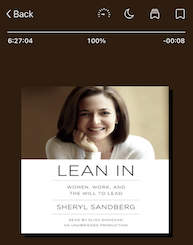
<p>Sandberg, Sheryl. <em><a href="https://www.goodreads.com/book/show/16071777-lean-in">Lean In: Women, Work, and the Will to Lead</a></em>. Random House Audio, 2013. Audiobook. Accessed via Libby.</p>

<h2 id="my-review-45">My Review: 4/5</h2>

<p>This book is an easy read, presented as a combination of anecdotal stories and observations from Sandberg about how best to encourage and support women in the workforce. There are also cited studies and specific actions suggested to incorporate into your work practices.</p>

<p>On this mark, it hits well; it is more polished and fleshed out than her TED Talk.<sup id="fnref:ted"><a href="#fn:ted" class="footnote" rel="footnote" role="doc-noteref">1</a></sup> There are some cited works that I was familiar with and others I was not. One especially important point in this book is that the more women (or any group, for that matter) are included, the less that group sticks out and the more it fits in. This is explored more in depth in <em><a href="https://en.wikipedia.org/wiki/The_Tipping_Point">The Tipping Point</a></em> by Gladwell.</p>

<p>One study Sandberg cites found that when comparing identical CVs with male and female names, both women and men adjusted their expectations to better fit the male candidate. She also points out that women are less likely to negotiate terms of employment, and no one ever asks a man “how he does it all.”</p>

<p>If there is one nit I have to pick with the book, it is the focus on women’s domestic partners contributing more, as if “getting the other half to do more” is the path to getting more women into leadership positions. I’m not sure how this advice applies to widows, divorcees, or someone whose spouse travels for months of the year. The other two suggestions—sit at the table and don’t leave before you leave—are learnable skills. One focuses on being present; the other on not curbing your ambition too early in anticipation of a future scenario with children.</p>

<p>Reading this book in 2024 feels especially poignant after the losses of presidential candidates Clinton and Harris. Regardless of how you voted, both Clinton and Harris have decades of leadership and political experience and to suggest otherwise is why I think Sandberg closes out her book with a call to continue to embrace and advance feminism as the equality of the sexes.</p>

<p>I do think reading this book is worthwhile to gain the perspectives of an accomplished business leader.<sup id="fnref:almost"><a href="#fn:almost" class="footnote" rel="footnote" role="doc-noteref">2</a></sup></p>

<h3 id="date-read">Date Read</h3>
<p>2024/12/29</p>

<hr />

<h3 id="significant-revisions">Significant Revisions</h3>

<ul>
  <li>Dec 30th, 2024 Originally published on <a href="https://www.jsrowe.com">https://www.jsrowe.com</a> with uid 544D5BB6-9AEB-4946-8C4F-C4517E0A44CA</li>
</ul>

<h3 id="footnotes">Footnotes</h3>

<div class="footnotes" role="doc-endnotes">
  <ol>
    <li id="fn:ted">
      <p>I understand that this book is the continuation of the high-level thoughts presented in <a href="https://leanin.org/education/ted-talk-why-we-have-too-few-women-leaders">TED Talk with Sheryl Sandberg: Why We Have Too Few Women Leaders</a>. <a href="#fnref:ted" class="reversefootnote" role="doc-backlink">&#8617;</a></p>
    </li>
    <li id="fn:almost">
      <p>I almost wrote “female leader,” but as Sandberg points out, we should be striving for a future where such modifiers aren’t necessary. Guess I still have work to do. <a href="#fnref:almost" class="reversefootnote" role="doc-backlink">&#8617;</a></p>
    </li>
  </ol>
</div>]]></content><author><name>James Rowe</name></author><category term="review" /><category term="book" /><category term="nonfiction" /><category term="leadership" /><summary type="html"><![CDATA[]]></summary></entry><entry><title type="html">Quick Thoughts on Originals: How Non-Conformists Move the World</title><link href="https://www.jsrowe.com/originals/" rel="alternate" type="text/html" title="Quick Thoughts on Originals: How Non-Conformists Move the World" /><published>2024-12-10T00:54:01+00:00</published><updated>2024-12-10T00:54:01+00:00</updated><id>https://www.jsrowe.com/originals</id><content type="html" xml:base="https://www.jsrowe.com/originals/"><![CDATA[<p><img src="/assets/posts-images/book-originals.png" alt="" /></p>

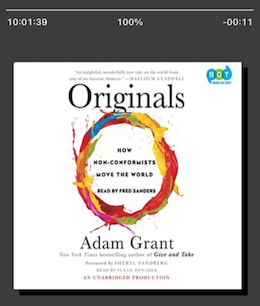
<p>Adam M. Grant, <em><a href="https://www.goodreads.com/book/show/25614484-originals">Originals: How Non-Conformists Move the World</a></em>,  Penguin Audio 2016 (Audio CD) ISBN 9780147524409 (ISBN10: 0147524407) Accessed via Libby.</p>

<h2 id="my-review-45">My Review 4/5</h2>

<p>Good solid quick reading covering some of the practical applications of popular-psychology to work habits. As I finished the book, I was left with the perception that the book was about twice as long as it needed to be. The first half of the book delves into some of the ways that original thinkers approach problem solving. But not all is lost. I did learn some new concepts and studies that I hadn’t heard before.</p>

<h3 id="4-responses-to-a-challenge">4 Responses to a Challenge</h3>

<p>I learned from <em>Inside Out</em> and various books (<em>Who Moved My Cheese</em>, <em>Our Iceberg Is Melting</em>) that there are emotional responses to challenges, but this book also highlighted responses to a challenge that adds perspective to the outcomes.</p>

<ul>
  <li>Exit - Leave the system</li>
  <li>Voice - Try and change the system</li>
  <li>Persistence - Endure the system (malicious compliance?)</li>
  <li>Neglect - Ignore</li>
</ul>

<p>Irrespective of originally understanding this framework for sorting through the rush of actions in the face of a challenging situation was useful.</p>

<h3 id="mental-models">Mental Models</h3>

<p>Have a balanced risk portfolio and leaving things unfinished. Its ok to extend yourself and take risks, but just like poker those risks can be applied intelligently or recklessly. Also that leaving things unfinished and in your mind can engage deeper thought on it. Thoughtful procrastination can spur innovation.</p>

<p>Now I have a reason to leave things to the very last minute. I’m getting my juices going!</p>

<h3 id="date-read">Date Read</h3>
<p>2024/12/07</p>

<hr />

<h3 id="significant-revisions">Significant Revisions</h3>

<ul>
  <li>Dec 10th, 2024 Originally published on <a href="https://www.jsrowe.com">https://www.jsrowe.com</a> with uid 320823D3-6F80-4E0E-BA34-CD500B5A9940</li>
</ul>]]></content><author><name>James Rowe</name></author><category term="review" /><category term="book" /><summary type="html"><![CDATA[]]></summary></entry><entry><title type="html">Book Review of “Building Your Business”</title><link href="https://www.jsrowe.com/building-your-business/" rel="alternate" type="text/html" title="Book Review of “Building Your Business”" /><published>2024-11-02T02:58:20+00:00</published><updated>2024-11-02T02:58:20+00:00</updated><id>https://www.jsrowe.com/building-your-business</id><content type="html" xml:base="https://www.jsrowe.com/building-your-business/"><![CDATA[<p><img src="/assets/posts-images/audiobook-tracy-building-your-business.png" alt="picture of building your business book" class="img-stylish" /></p>

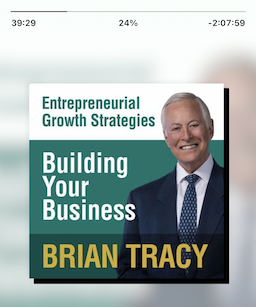
<p>Brian Tracy, <em>Building Your Business: Entrepreneurial Growth Strategies</em>, Ascent Audio 2016 (audiobook)</p>

<p><a href="https://share.libbyapp.com/title/2906125">https://share.libbyapp.com/title/2906125</a></p>

<h2 id="my-review-15">My Review 1/5</h2>

<p>Disclaimer: I did not finish this work. In fact, you could have convinced me this was published in the early 2000s—the dated references to Yahoo, Kmart, and direct mail all turned me off. Only upon writing this review did I discover it was actually published in 2016! I picked this familiar author to try out <code class="language-plaintext highlighter-rouge">Libby</code><sup id="fnref:libby"><a href="#fn:libby" class="footnote" rel="footnote" role="doc-noteref">1</a></sup> on my phone. I’ve been very happy with his other works such as <em><a href="/eat-that-frog/">Eat That Frog</a></em> and <em><a href="/management/">Management</a></em>, but this time I was left disappointed.</p>

<p>Production quality is poor—it almost sounds like Brian Tracy was winging it in the recording booth, revising his anecdotes as he went along. I also discovered that this is <em>not</em> an ISBN published book but a seminar-style recording. Hard pass.</p>

<hr />

<h3 id="significant-revisions">Significant Revisions</h3>

<ul>
  <li>Nov 2nd, 2024 Originally published on <a href="https://www.jsrowe.com">https://www.jsrowe.com</a> with uid FE8FD2C6-DE9F-4CCE-A05A-7FDEDEA7D9BD</li>
</ul>

<h3 id="footnotes">Footnotes</h3>

<div class="footnotes" role="doc-endnotes">
  <ol>
    <li id="fn:libby">
      <p>When I was commuting to work in-office, I had roughly 90 minutes to devote to daily listening of audiobooks on CD from my local library. Since I’ve been working remotely, my consumption of books has dropped precipitously, but I recently decided to give OverDrive another shot—and learned it is now <a href="https://libbyapp.com">Libby</a>. <a href="#fnref:libby" class="reversefootnote" role="doc-backlink">&#8617;</a></p>
    </li>
  </ol>
</div>]]></content><author><name>James Rowe</name></author><category term="review" /><category term="did-not-finish" /><category term="business" /><category term="book" /><summary type="html"><![CDATA[]]></summary></entry></feed>